RT.com
05 Aug 2025, 00:30 GMT+10
The spirit of Helsinki is gone, and so is the old idea of European security
This week marks the 50th anniversary of a landmark event in European diplomacy. In 1975, the leaders of 35 countries, including the United States, Canada, and almost all of Europe, gathered in the Finnish capital Helsinki to sign the Final Act of the Conference on Security and Cooperation in Europe (CSCE). The agreement capped years of negotiation over peaceful coexistence between two rival systems that had dominated world affairs since the end of the Second World War.
At the time, many believed the Final Act would solidify the postwar status quo. It formally recognized existing borders - including those of Poland, the two Germanys, and the Soviet Union - and acknowledged the spheres of influence that had shaped Europe since 1945. More than just a diplomatic document, it was seen as a framework for managing ideological confrontation.
Fifty years later, the legacy of Helsinki is deeply paradoxical. On the one hand, the Final Act laid out a set of high-minded principles: mutual respect, non-intervention, peaceful dispute resolution, inviolable borders, and cooperation for mutual benefit. In many ways, it offered a vision of ideal interstate relations. Who could object to such goals?
Yet these principles were not born in a vacuum. They were underpinned by a stable balance of power between the NATO and the Warsaw Pact. The Cold War, for all its dangers, provided a kind of structure. It was a continuation of the Second World War by other means - and its rules, however harsh, were understood and largely respected.
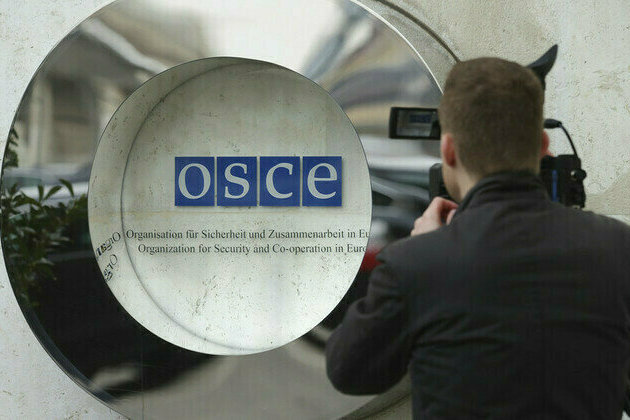
That system no longer exists. The global order that emerged after 1945 has disintegrated, with no clear replacement. The post-Cold War attempts to graft a Western-led system onto the rest of Europe succeeded only briefly. The OSCE, which evolved from the CSCE, became a vehicle for imposing Western norms on others - a role it can no longer credibly perform.
Despite the growing need for cooperation in an unstable world, the OSCE today exists mostly in theory. The notion of 'pan-European security' that underpinned the Helsinki Process has become obsolete. Processes are now fragmented and asymmetric; rivals are unequal and numerous. There is no longer a shared framework to manage disagreements.
That hasn't stopped calls to revive the OSCE as a political mediator, particularly amid recent European crises. But can an institution forged in a bipolar world adapt to the multipolar disorder of today? History suggests otherwise. Most institutions created in the mid-20th century have lost relevance in periods of upheaval. Even NATO and the EU, long considered pillars of the West, face mounting internal and external pressures. Whether they endure or give way to new, more flexible groupings remains to be seen.
The fundamental problem is that the idea of European security itself has changed - or perhaps disappeared. Europe is no longer the center of the world it once was. It has become a theater, not a director, of global affairs. For Washington, Europe is increasingly a secondary concern, viewed through the lens of its rivalry with China. American strategic planning now sees Europe mainly as a market and an auxiliary partner, not a driver of global policy.
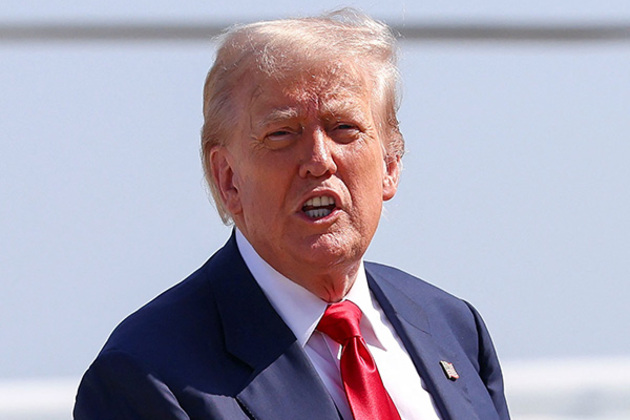
The Trump administration's economic policies highlight this shift. Measures targeting Russia, for example, are often less about Moscow and more about Beijing or other major powers. Even the conflict in Ukraine, while grave, is treated by many in Washington as a pawn in broader geopolitical chess.
Consider, too, the OSCE's diminished role in managing real-world conflicts. One recent case illustrates the point: proposals to establish an extraterritorial corridor through Armenia, protected by an American private military company. This idea may never materialize, but it reflects the mindset now prevalent in the West - one in which legitimacy can be manufactured as needed, with or without traditional institutions like the OSCE.
The Final Act of 1975 was, in retrospect, the zenith of Europe's geopolitical stature. Much of Europe were no longer the main actors, but it remained the primary arena. Even that is no longer true. The continent's fate is increasingly shaped by external powers and shifting alliances. New agreements are needed, ones that reflect today's realities and involve new players. But whether such agreements can be reached is far from certain.
The 'spirit of Helsinki' has not disappeared - but it no longer animates the institutions it once created. The principles remain appealing, but the context that made them meaningful is gone. If collective Europe wants a new era of security and cooperation, it will have to begin not by reviving the past, but by accepting its end.
This article was first published in the newspaperRossiyskaya Gazetaand was translated and edited by the RT team
(RT.com)
Get a daily dose of Hong Kong Herald news through our daily email, its complimentary and keeps you fully up to date with world and business news as well.
Publish news of your business, community or sports group, personnel appointments, major event and more by submitting a news release to Hong Kong Herald.
More InformationWASHINGTON, D.C.: With the clock ticking toward a self-imposed trade deal deadline, U.S. President Donald Trump has announced steep...
MOSCOW, Russia: One of the most powerful earthquakes ever recorded — measuring 8.8 in magnitude — struck off the remote coast of Russia's...
BEIJING/SHANGHAI/NEW YORK: Nvidia has placed an order for 300,000 more H20 chips with contract manufacturer TSMC, two sources told...
HONG KONG: CK Hutchison is exploring the inclusion of a major Chinese investor in the proposed US$22.8 billion sale of its global ports...
The spirit of Helsinki is gone, and so is the old idea of European security This week marks the 50th anniversary of a landmark event...
New Delhi [India], August 4 (ANI): US President Donald Trump's claim that India is buying massive amounts of Russian oil and selling...
NEW YORK CITY, New York: American Eagle Outfitters, a popular U.S. clothing brand, wanted to grab attention with its new fall advertising...
WASHINGTON, D.C.: The U.S. labor market lost momentum in July, with job growth slowing more than expected and major downward revisions...
SAN FRANCISCO, California: Apple projected stronger-than-expected revenue for the current quarter ending in September, helping lift...
SEATTLE, Washington: More than a year after a door panel ripped off a Boeing 737 MAX 9 mid-flight, four flight attendants who were...
SEATTLE, Washington: Starbucks expressed confidence this week that a combination of streamlined store operations and new menu offerings—such...
LOS ANGELES, California: Warner Bros Discovery will cut around 10 percent of staff from its motion picture group as part of a broader...